If you’ve ever had to choose between paying rent and fixing a broken tooth, you already understand the problem this bill is trying to solve.
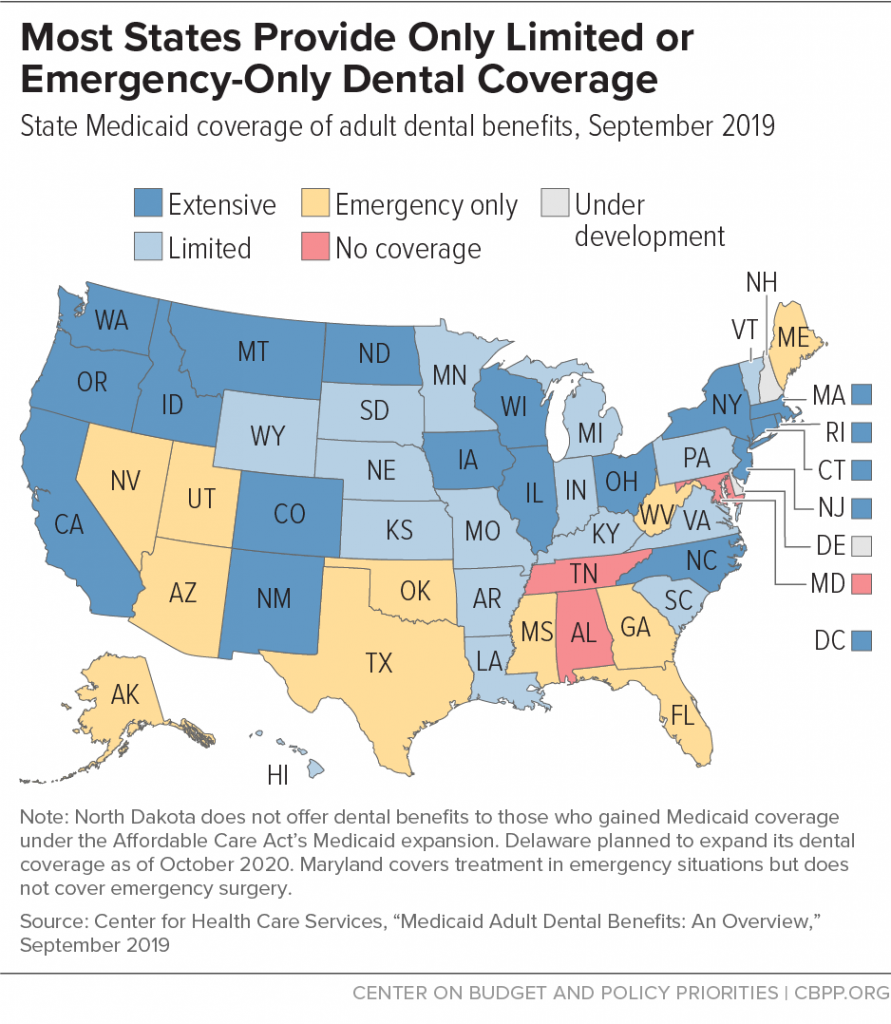
Right now, whether an adult on Medicaid can get dental care depends almost entirely on which state they live in. Some states cover cleanings, fillings, and dentures. Others cover only emergency extractions — pull the tooth, no fix, no follow-up. A handful of states offer nothing at all for adult teeth. There’s no federal floor, no minimum standard. Your zip code decides your smile.
A new bill introduced in Congress is aiming to change that.
What Is H.R. 9831?
H.R. 9831, the Medicaid Dental Benefit Act of 2026, was introduced on July 22, 2026 by Rep. Nanette Diaz Barragán (D-CA-44) and currently has more than a dozen cosponsors. It’s been referred to the House Committee on Energy and Commerce, which means it’s still early in the process — it has not passed, and it is not law. But it’s worth understanding now, because bills like this move (or stall) based on how much noise constituents make.
Here’s the short version of what it would do:
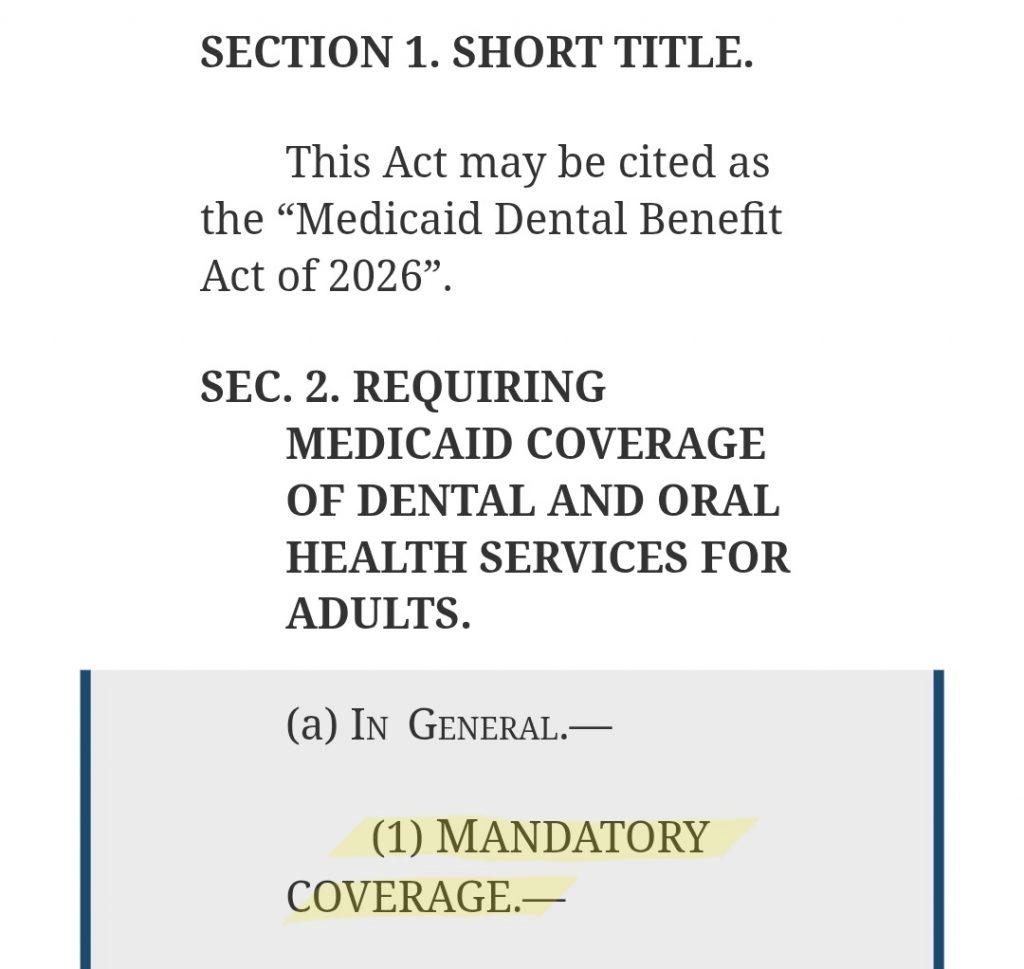
- Make adult dental coverage mandatory under Medicaid in all 50 states and Washington, D.C. — instead of leaving it up to each state to decide, as it is today.
- Set a real minimum benefit, covering routine diagnostic and preventive care (exams, cleanings, X-rays, fluoride treatments), basic services (fillings, extractions), and major services (things like dentures, crowns, and root canals) — not just emergency pain relief.
- Take effect January 1, 2027, if enacted.
- Require a national report from the Medicaid and CHIP Payment and Access Commission (MACPAC) on adult oral health access, disparities, and reimbursement problems.
- Fund outreach and provider training, including a program to help connect people to care and train dental and medical professionals in culturally competent treatment for people with disabilities, pregnant and postpartum patients, Native populations, and other underserved groups.
This isn’t a brand-new idea in Congress — versions of the Medicaid Dental Benefit Act have been introduced in past sessions — but this is the current bill moving through the 119th Congress.
Why This Matters
I don’t need to explain to this community what it’s like to live with untreated dental problems. We already know:
- Oral health is directly tied to heart disease, diabetes, and overall chronic disease risk — this isn’t cosmetic, it’s medical.
- Nearly half of states still don’t offer comprehensive adult dental coverage under Medicaid, and some offer none at all.
- People with disabilities, low-income adults, older adults, and communities of color are disproportionately affected by these coverage gaps.
- For a lot of people, “no dental coverage” doesn’t mean “minor inconvenience” — it means living with pain, infection, tooth loss, and the isolation that comes with being embarrassed to smile or eat in public.
A federal minimum standard would mean that whether you can get a filling instead of an extraction — or get dentures instead of nothing — stops depending on which state line you happen to live on.
What You Can Do
Bills like this live or die based on committee attention and constituent pressure. You don’t need to be an expert or write a perfect letter. A short, personal message to your representative — especially if you can speak to your own experience — carries real weight.
Here’s how to find and contact your representative:
Reference the bill by name and number: H.R. 9831, the Medicaid Dental Benefit Act of 2026.
Go to house.gov/representatives and enter your zip code to find your House member.
Call their office (phone calls are logged and often carry more weight than emails) or send a message through their official contact form.
Sample Message or Call Script
Feel free to copy, personalize, and use this:
“My name is [Your Name] and I’m a constituent from [City, State]. I’m writing to ask Representative [Name] to support H.R. 9831, the Medicaid Dental Benefit Act of 2026.
Right now, adult dental coverage under Medicaid varies wildly from state to state, and too many people are left with only emergency extractions instead of real treatment options. [Optional: I’ve personally experienced/witnessed how a lack of dental coverage affects health, work, and daily life.]
Oral health is connected to serious health conditions like heart disease and diabetes, and it shouldn’t be treated as optional or cosmetic. I’d urge the Representative to cosponsor and support H.R. 9831 to make sure adult dental care is a guaranteed part of Medicaid nationwide.
Thank you for your time and consideration.”
If you’d rather call, that same message works almost word-for-word as a script — staffers are used to logging short, direct calls like this.
Bottom Line
H.R. 9831 is still early — it needs committee movement and more cosponsors before it has a real shot at a floor vote. But bills like this get pulled out of committee limbo when representatives hear from real people who are affected. If dental access has ever been a barrier for you or someone you love, your voice on this one actually matters.
Track the bill’s status yourself anytime at congress.gov/bill/119th-congress/house-bill/9831.
Leave a Reply